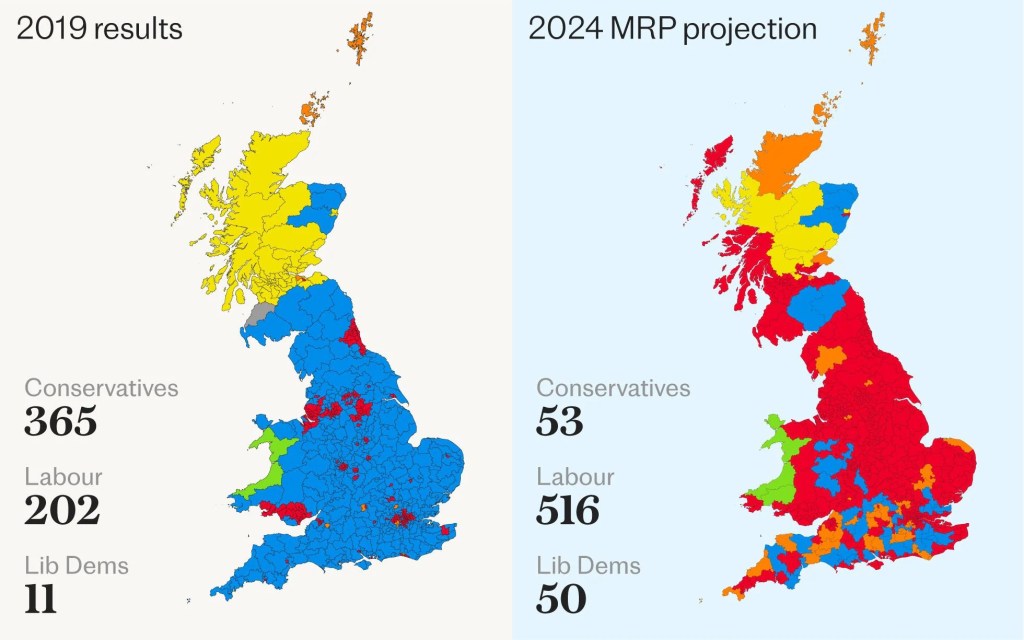
At the most recent UK General Election, merely a few weeks ago, Rishi Sunak’s Conservative Party suffered what is possibly the biggest beating any major party has suffered under the First Past the Post system, an astonishing far cry from only 5 years earlier when it was the Labour Party that suffered the humiliating defeat and the Conservatives a big majority with 20% more of the vote share than they got in 2024.
But was it the absolute worst defeat ever? Here’s how it compares to other absolutely catastrophic public rebukes of political parties since the 1832 Great Reform Act.
TORIES (1832) (LEADER: DUKE OF WELLINGTON)
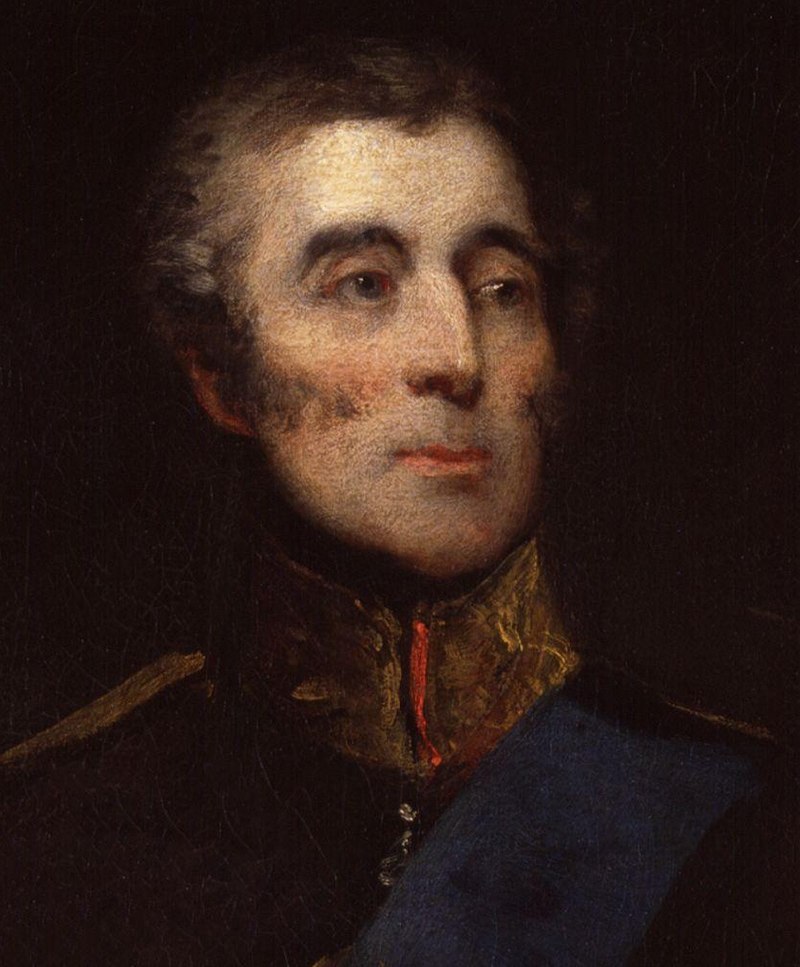
Funnily enough, that’s exactly where we start. 1832 was the first General Election where voting rights were extended towards the British public (albeit, a bit limited at the time towards males of a certain property value) and, obviously, this resulted in a huge victory for Earl Grey and his Whig Party, who passed the act, and a massive anihilation for the Tory Party and the Duke of Wellington, who opposed it.
The Whigs received 441 seats (still never topped by any party since) and the Tories plummeted all the way down to 175. Amazingly, still more seats than the Tories got this election (though maybe helped by a fixed two party system at the time) and 6% more of the vote share (29% Vs 23%).
Following this election, the Tories would collapse as a political force, splintering off into the Conservative and Peelite parties, both of which came to support and even expand the Great Reform Act.
LIBERALS (1886) (LEADER: WILLIAM EWART GLADSTONE)
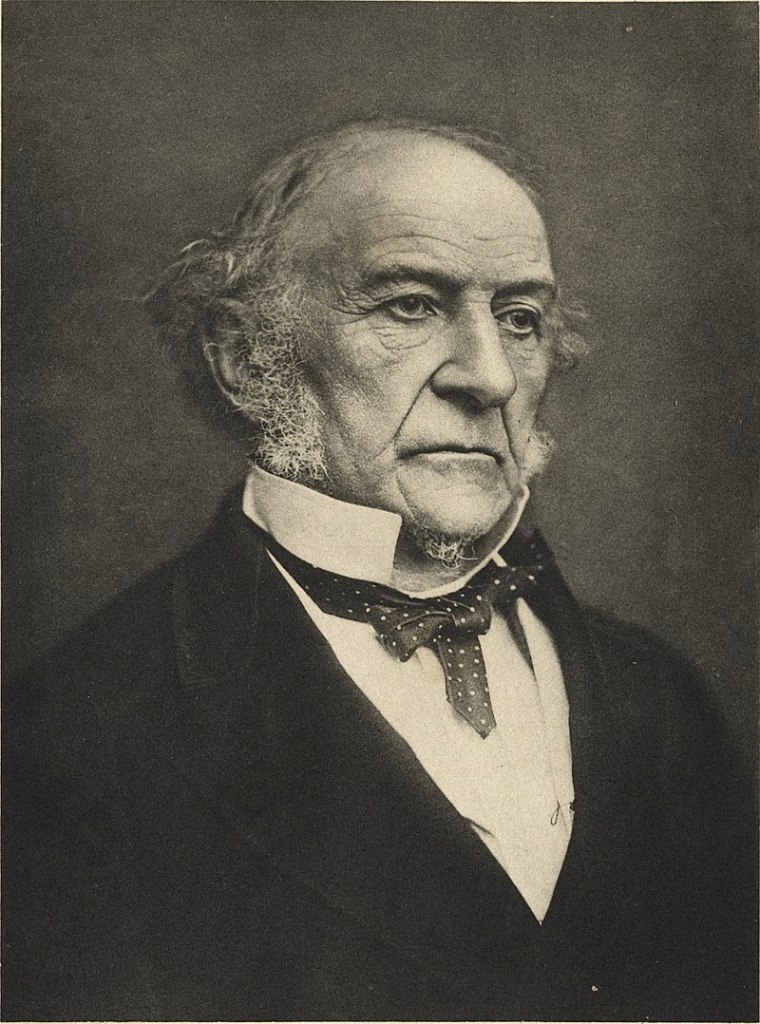
It’s surprising that one of Britain’s greatest and most historically revered Prime Ministers is on this list but the mid-1880’s saw Gladstone’s reputation at an all time low. Ironically, after he had passed the Reform Act of 1884 that finally expanded suffrage to lower class males.
Largely suffering a backlash from the British population over his abandonment of Major Gordon and his forces in Khartoum, Gladstone had lost the 1885 election to The Marquess of Salisbury and the Conservatives, but within a few months would be back in Government thanks to support from the Irish Parliamentary Party. But he soon lost his authority after breakaway Liberal Unionists abandoned the party over Gladstone’s then controversial support for Irish Home Rule, forming an electoral alliance of their own with the Conservatives.
While there wasn’t too much of a gap in vote share between the parties (with the Liberals still hanging on to 45% of the vote), the backing to the Conservatives given by the breakaway Unionists saw the Liberals unable to contest a lot of seats, and thus suffered a big defeat, winning only 192 seats while the Con/Unionist alliance together were miles ahead with 393 seats between them. Their seat share was so low that there was no alliance possible with the Irish to come anywhere near close to what his opponents gained.
LIBERALS (1895) (LEADER: EARL OF ROSEBURY)
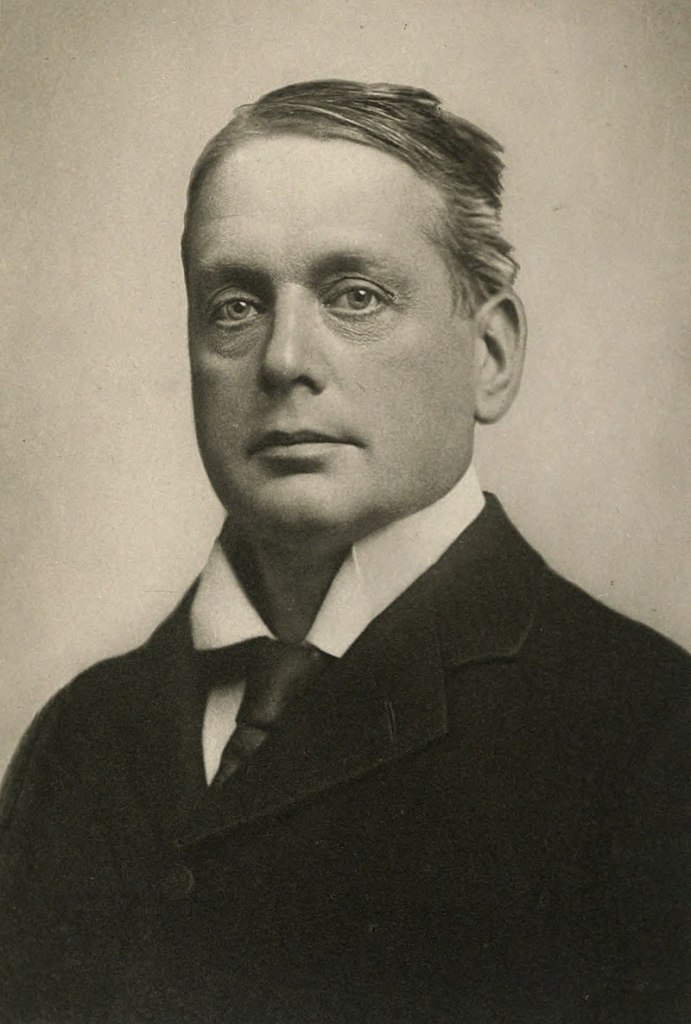
Somehow an even worse case of electoral destruction for the fractured Liberal party was just a few years later in 1895. By this point, Gladstone had finally come back to power, again following a deal with the Irish Nationalists. In that election, he had got the Liberals back to 272 seats, a huge gain from the previous election covered above considering the Conservative/Unionist alliance he was still standing against.
Standing against the same alliance, his successor the Earl of Rosebury managed to torpedo all that good work thanks to his staggering incompetance in Government and remarkable ability to make everyone who worked or dealt with him mad.
After 1 year of Rosebury, the party made a huge net loss of 94 seats and collapsed all the way down to just 177 seats, while the Conservatives/Lib Unionists together won 411. Again, there wasn’t much of a significant gap in vote share and the Liberals still won 45%, but the general lack of support for the Liberals in various seats continued due to Rosebury’s abysmal leadership, and they were wiped out worse than ever before.
CONSERVATIVES/UNIONISTS (1906) (LEADER: ARTHUR BALFOUR)

I’ve not included the Liberals 1900 defeat to Salisbury’s Conservative/Liberal Unionist Coalition, due to the context of the Liberals being a rather depleted force in that election and the coalition having many seats uncontested as a result.
In 1906, however, it was the coalition that suffered an electoral wipeout. With the Liberals rejuvanated under a more progressive platform than ever before and now in government thanks to PM Arthur Balfour’s support in parliament collapsing, many voters appalled and turning away from the Conservatives due to the discovery of concentration camps used in the horrific Boer War and Balfour’s own reactionary racial attitudes, plus the party themselves becoming fractured and divided among issues of trade and protectionism, the Tories were all set to be beset by a significant swing to the Liberals.
But they were also beset by the significant rise in popularity of the Labour Party throughout the country, who themselves took 29 seats, resulting in the election result being worse than expected for the fractured party, falling down to a shocking 156 seats with 5% less votes than the Liberals, who gained a huge majority with 397.
This would be the lowest seat count in the Conservative Party’s history until the 2024 election.
LIBERALS (1924) (LEADER: HH ASQUITH)
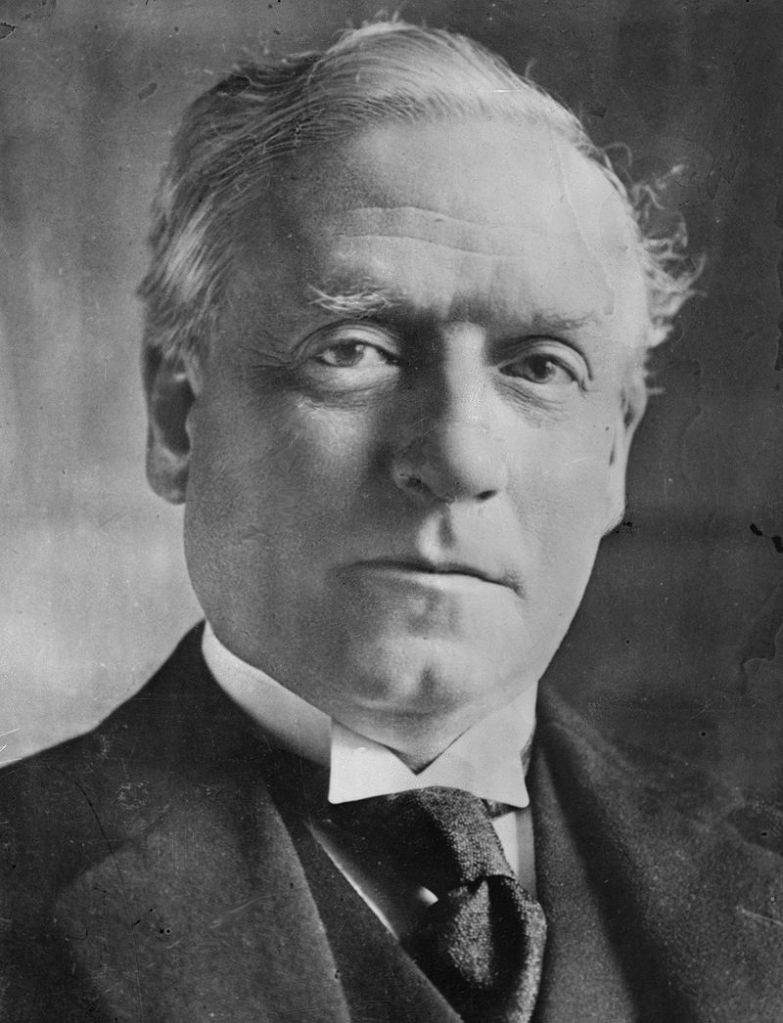
The demise of the original Liberal party into electoral irrelevance (being supplanted by Labour) began a couple of years earlier with the split between PM David Lloyd-George’s National Liberals (in coalition with the Conservatives) and former Prime Minister HH Asquith’s more partisan Liberal faction, resulting in a split vote in the 1922 election that allowed Labour to surpass them as the 2nd largest party.
In 1923, Asquith’s Liberals managed to get back into Government, supporting Labour’s Ramsay MacDonald as Prime Minister in a coalition Government after none of the three main parties received a majority, but that uneasy alliance collapsed just a year later, resulting in yet another election.
Unfortunately for the Liberals, their prior alliance with Labour had by that point managed to alienate many of their upper and middle class support, plenty of which switched to the Conservatives. Receiving only 17.8% of the vote (disastrous at the time given differences in population size), the Liberals made a net loss of 118 seats and held on to only 40, plunging into permanent 3rd party irrelevancy. Due to Labour still being a relatively small party despite being in Government, this helped hand an enormous uncontested majority to Stanley Baldwin’s Conservatives for the next 5 years.
CONSERVATIVES/LIBERALS (1945) (LEADERS: WINSTON CHURCHILL/ARCHIBALD SINCLAIR/ERNEST BROWN)
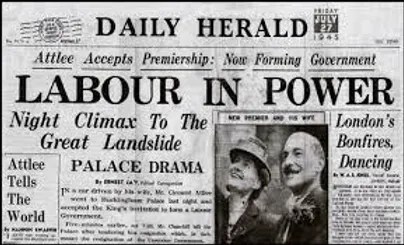
Winston Churchill was a hero amongst the British people for his stellar leadership during World War II, but even that did not help his party, the Conservatives, in an election where the British public were gagging for change of some sort.
The Conservatives, in a grand “National” coalition with former PM Ramsay MacDonald’s breakaway Labour faction and a similar breakaway faction of Liberals, had caused horrible ruin to the British economy in the 1930’s with their remarkably out of touch and cold response to the Great Depression. And thus even with Churchill in charge, they were not remotely trusted to rebuild the country in peacetime, with the country swinging in extraordinary, unpredictable fashion to Clement Attlee and Labour’s ambitous agenda, delivering an enormous landslide as Labour won 393 seats with 48% of the vote, the Conservatives falling down to just 197 seats and a pitiful 39.6% of the vote.
It was a clear mandate by the country for progressive change, with both the Liberals and National Liberals falling into fringe party status (only 23 seats and 11% of the vote between the 2 parties), both also associated with the failed politics of the pre-war period, and setting the stage for a revived era of fixed 2-party politics for the next 38 years.
LABOUR (1983) (LEADER: MICHAEL FOOT)
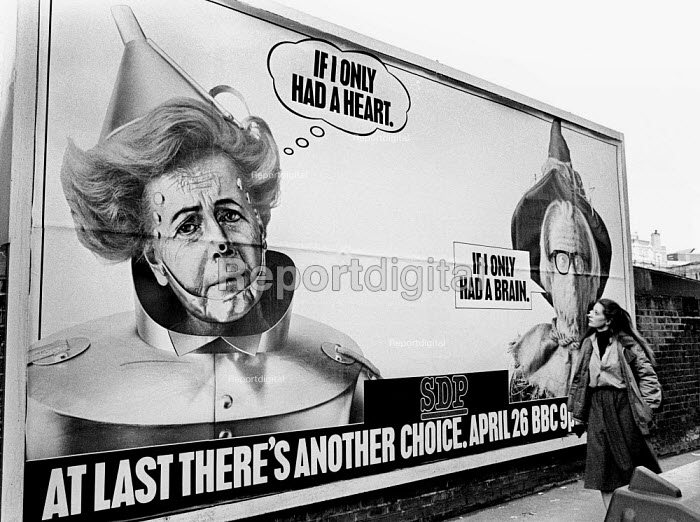
The two party system largely continued uninterrupted throughout the era of the post-war social democratic consensus, with neither the Conservatives or Labour suffering hugely damaging defeats in that period. That changed in 1983, thanks to that age old problem of a fractured party obsessed with its own ideological differences. Unusually, on this occasion, it was the opposition that was stuck in this rut.
After the middling and weak leadership over wages and trade union unrest in the 1970’s paved the way for a different direction under Margaret Thatcher, Labour did not respond well to their loss, splitting into different factions after the party elected the ultra left-wing Michael Foot as leader. Though Thatcher herself attracted a lot of huge scorn for her occasionally harsh and ruthless streak in her attempts at radical reforms, Foot’s leadership inspired practically no one beyond left wing militants in a country that still had an appetite for change after a decade of economic disaster and class war.
Deep dissatisfaction with both Labour and the Conservatives promoted a long awaited revival of a strong third party option, with David Steel’s Liberals forming an Alliance with a breakaway moderate Labour faction (calling themselves the Social Democratic Party).
But with Thatcher’s approval ratings recovering by 1983 due to her handling of the Falklands crisis and a long awaited economic recovery, all the Alliance succeeded in doing was splitting the anti-Thatcher progressive vote, gifting the Conservatives a big majority in the process while they only won 23 seats themselves despite gaining 25% of the vote, showing once again a big failure of our dated, archaic electoral system.
Regardless, it was an existentially brutal night for Labour, not even managing to capitalise on the strong anti-Tory sentiment in the North of England as they received only 27% of the vote (in what remains their lowest vote share post-1918!), barely more than the Alliance, and fell down to just 209 seats.
Labour wouldn’t fare significantly better under the more moderate leadership of Neil Kinnock in 1987 and 1992, but he does deserve at least some credit for maintaining Labour’s status as the 2nd major party in parliament which was genuinely under threat as a result of the party’s damanaging factionalism, rise of the Alliance and later Liberal Democrats and the slow struggle to modernise the party. Plus their share of the vote and seats improved somewhat with each election afterwards.
CONSERVATIVES (1997) (LEADER: JOHN MAJOR)
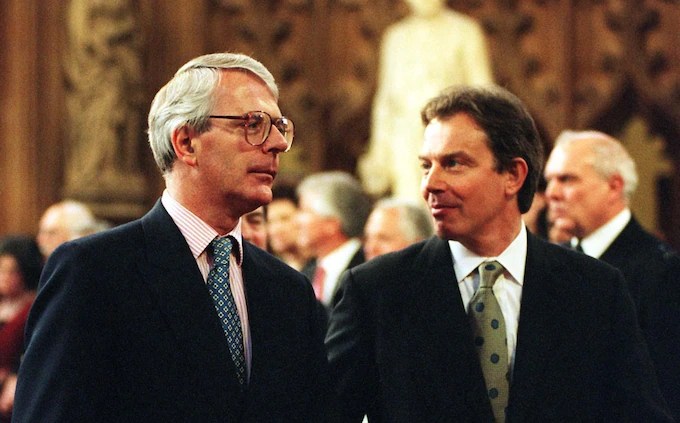
Another election result highlighting that the public tend to heavily turn away from disunified political parties obsessed with their own infighting over the country’s issues.
That’s exactly what the Conservatives had become by 1997, tired from 18 controversial years in Government and now plagued by having lost their economic credibility through the 1992 Black Wednesday crash, Prime Minister John Major totally lost his grip of his own party too as he found himself constantly under attack by the socially reactionary anti-European wing of his party that wanted a big break off from the European Union.
Couple that with the perception that the Conservatives were out of ideas with how to progress the country further forward and the rise in popularity of Tony Blair’s modernised and media savvy “New Labour”, and the once popular Major never stood a chance. The Conservatives suffered a catastrophic wipeout, falling down to a near-record low of 165 seats with only 30% of the vote, losing seats not only to labour, who won a super-majority with 418 (on 43% of the vote) but also to the Liberal Democrats, who under Paddy Ashdown’s leadership won the largest number of 3rd party seats since 1929 with 46, benenfiting particularly from the Conservatives total collapse in Scotland and taking typically Conservative heartlands in the South.
CONSERVATIVES (2001 & 2005) (LEADERS: WILLIAM HAGUE/MICHAEL HOWARD)
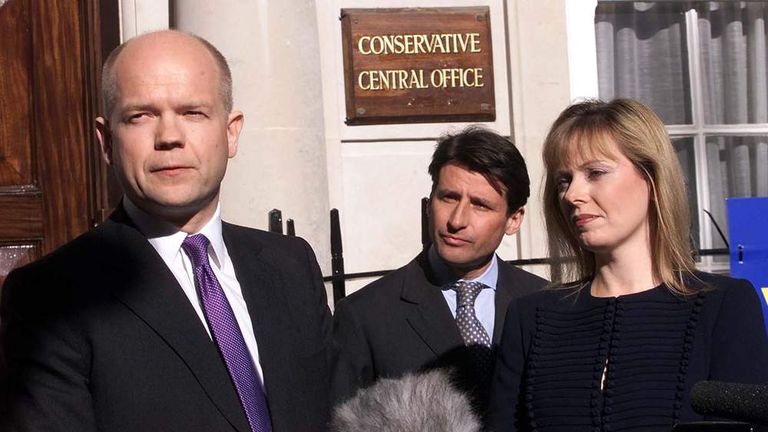
The Conservatives really didn’t seem to learn any lessons from their 1997 implosion, being an absolute utter gift to Labour throughout the next 13 years under 4 different leaders, each one barely more popular than the other. They continued drifting in a socially reactionary direction, increasingly becoming to be seen as “the nasty party”, and whatever Labour’s faults during their time in Government, voters seemed to still prefer them or even chucking their vote at a 3rd party before turning back to the Tories and their allergy to progress.
Going through 3 leaders who all pandered hard to or indeed were from the dinosaur nationalist right wing of the party, the Conservatives first suffered just as bad of a beating in the 2001 election as they did in 1997, with William Hague’s leadership producing a meagre gain of just 1 seat and only a 1% increase in their vote share. Even with Labour’s share of the vote dropping 3% from the previous election, a vast majority of their lost votes went to the Liberal Democrats rather than to the Tories, with the Lib Dems gaining 6 seats at Labour’s expense.
Ian Duncan-Smith (*spit*) then didn’t even make it to the next election, serving as leader for 2 years before being ousted by his own party in a vote of no confidence due to how astonishinly unpopular he was.
But their most embarassing moment in their time in the wilderness arguably came in 2005. With Tony Blair now heavily unpopular due to his decision to throw Britain into the Iraq War, Labour’s support plummeted, as did their share of the vote, down to just 35%. In what looked like an existential moment for the party however, more voters still went for them than the Conservatives, who under Michael Howard’s leadership again only barely increased their share of the vote to 32%, instead paving the way for the further rise in support for the Liberal Democrats, who won an impressive 22% of the vote and 62 seats, continuing their steady surge in support at the expense of both main parties, no doubt boosted by their status as the only major party to have opposed the Iraq War.
Even with David Cameron finally turning the Tories towards a more socially liberal direction and somewhat increasing the party’s support as a result, most voters still couldn’t quite bring themselves to support the Conservatives by the time of the 2010 election, with only a marginal increase in support and coming into power through a Coalition with the Lib Dems. But it was still a significant improvement on their past 2 election attempts, that’s for sure.
LABOUR (2010/2015) (GORDON BROWN/ED MILIBAND)
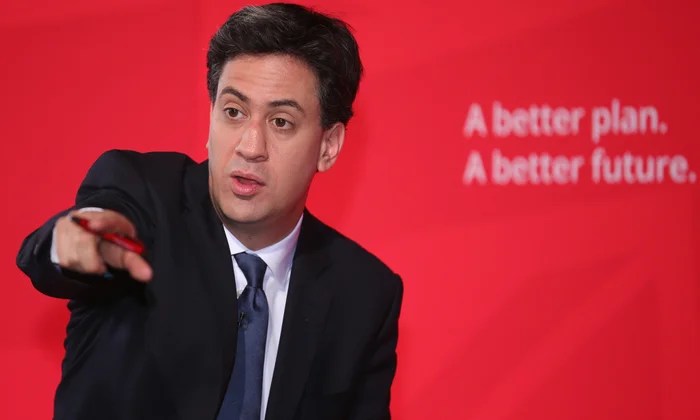
Neither of these elections are actually considered “disasters” for Labour by most people, but they really should be when looking at the underlying data.
Like most centre-left parties over the last 16 years, Labour have struggled to muster up much enthusiasm for themselves or connect with most voters, often appearing out of touch with the vast majority of voters with their relucantance to offer a real alternative or clear policies on responding to the economic catastrophes we’ve had, and helping open the door to dangerous right wing populists in the process.
Labour may have held on to 258 seats in the 2010 election, but had David Cameron’s Conservatives had more support (with just 306 seats and only 36% of the vote) and particularly without the Lib Dems splitting the vote in a lot of areas, they would have suffered a 1997 style wipeout. With many dissatisfied with Labour’s long term agenda after 13 years and wanting change, and the party’s standing also badly tainted by the global financial crisis, an increase in authoritarianism, Iraq and the Expenses Scandal, they received only a paltry 29% of the vote, even lower than the Conservatives in 1997.
Even more embarassing though was their limp loss in 2015. Against a very unpopular Conservative/Lib Dem coalition overseeing a slowly growing and stagnant economy with record food banks, a damaged NHS and brutal harsh welfare cuts, Labour under Ed Miliband’s leadership did not manage to strongly increase their share of the vote from last time, failing to construct a coherent or particularly inspiring message for change despite some solid policies.
The Conservatives vote share barely increased from 2010 themselves, and indeed (as with Labour) lost plenty of their former support to the ultra right nationalist UKIP party (who won 12% of the vote nationwide), yet mainly because of the Lib Dems total collapse in seats and vote share, the SNP surge across Scotland eliminating most of Labour’s former support and Labour still being even more unpopular than them, they managed to win a comfortable majority, with 330 seats to their 232.
LIBERAL DEMOCRATS (2015) (LEADER: NICK CLEGG)
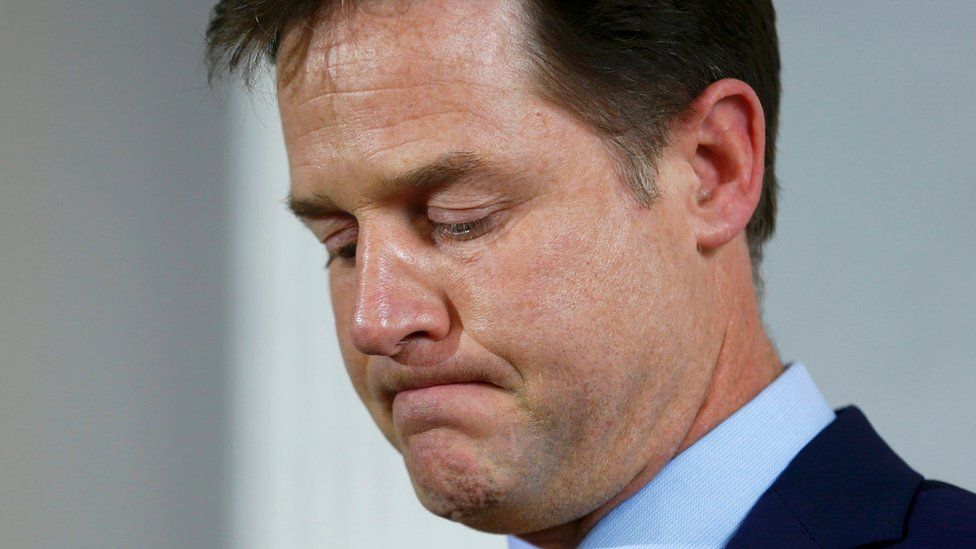
A great example, much like the recent election, of a total loss of trust in a party many felt betrayed most of the things they won votes on, the Liberal Democrats had built up an incredibly solid base through much of the 1980’s, 1990’s and 2000’s, being seen a significant 3rd party alternative and attracting many moderates from both the Labour and Conservative parties who did not see either of the two main parties as embodying liberal values.
Finally, in 2010 under the leadership of Nick Clegg, they managed to get into Government, receiving their largest vote share since 1983 (23%) and a very strong number of seats (57), enough for them to enter into a coalition with David Cameron’s Conservatives due to the latter not having enough seats to form a majority. This election saw a real rebuke of both major parties and was a great argument in favour of electoral reform to allow the smaller parties greater represenation.
Sadly, if Clegg was the one to get the Lib Dems over the line into Government at last, he was also the one who led the party to their worst electoral defeat in decades. While Clegg did work admirably hard in Government to get some concessions from the Tories on social issues and introduce at least a Referendum on Electoral Reform (which failed) he was perceived as too often going along with many of the Conservatives worst and most senseless austerity cuts and betraying many of the policies he himself ran on. A big example often cited being voting to raise University Tuition Fees to £9000 despite previously promising to work to abolish them in Government.
By 2015 the Lib Dems had pretty much pissed everyone off. Their former supporters abandoned them in droves for enabling the Conservatives in their foolish economic disaster, typical Conservative voters didn’t see them as much of alternative even if they disagreed with some things they did and many populists and social conservatives who voted UKIP already had a negative opinion of them. Their association with the Tories also played a part in their total wipeout in Scotland, formerly a very strong area for them.
The 2015 election saw them disastrously collapse down to 8 seats (down from 57 in 2010) and just 7.9% of the popular vote (down from 23%), both the lowest number of seats and lowest number of votes received by a Liberal party, period, since 1970, and returning the party back to fringe status until 2024.
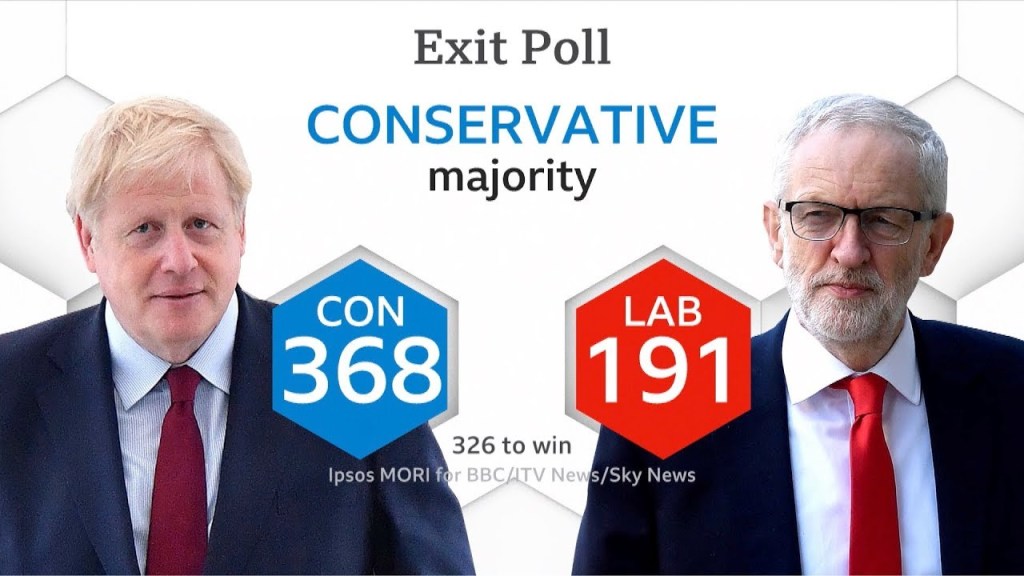
LABOUR (2019) (LEADER: JEREMY CORBYN)
Labour had a surprising revival in the 2017 election under the more left wing Jeremy Corbyn’s controversial leadership. Despite being under constant attack from the media, members of his own party trying to oust him and PM Theresa May seemingly getting a blank check from most of the population to get Brexit through and even sitting in an appalling position in the polls just a month before the election, Labour managed to massively increase their share of the vote to 40% (their highest since 2001) and eat into the Conservatives majority in the process, resulting in a hung parliament.
This was due to a few things, namely Corbyn managing a terrific campaign on real issues that appealed to people over May’s persistence with the status quo and also challenge people’s prior perception of him, much of the previous UKIP vote returning to a more populist Labour rather than all going to the more outwardly pro-hard Brexit Conservatives and managing to win over a lot of voters who either voted remain in 2016 or rejected May’s hard Brexit pandering.
By the time of the next election in 2019 however, Corbyn had eroded all of the support he had previously managed to build up as faith in Labour was destroyed once again by completely bungled/weak leadership on Brexit that alienated everyone from leavers annoyed by his repeated rejection of May’s deals and later support for a 2nd Referendum, moderate remainers annoyed by his lack of attempts to work across the aisle to reach a feasible Soft Brexit deal and making a hard Brexit deal or even No Deal further possible and hardcore remainers annoyed by his lack of outright opposition to Brexit in principle.
Other issues wrecking faith in Corbyn included his repeated blunders on statements involving national security such as his pathetic and worrying response to Russia’s Salisbury poisoning and a failure to make an argument for a clear vision amongst all the mess, resulting in a thrown together promising-the-Earth manifesto in 2019 which most voters didn’t see as remotely credible.
In fact, the eventual support for a 2nd Referendum is probably what saved Labour from a truly embarassing electoral wipeout on par with Conservatives this election as it brought in a good chunk of the remainer vote who had thought the Liberal Democrats position on reversing Brexit entirely was too extreme.
Labour thus received 32% of the vote (actually higher than in the 2010 or 2015 elections) but in what was a Brexit driven election where Boris Johnson’s “get it over with already” message cut through to most of the leave voters to unify behind him, and one where Labour ran a deeply unpopular leader and one in which Labour still lost a large amount of votes to Lib Dems, the SNP and even the Conservatives among its traditional Brexit-supporting heartlands, Labour still fell down to their lowest number of seats since 1935 with 202, and 11% behind the Conservatives in the popular vote.
CONSERVATIVES (2024) (LEADER: RISHI SUNAK)
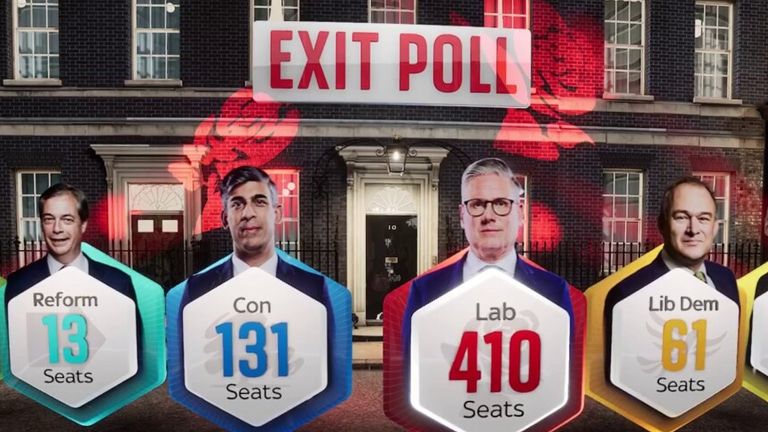
The Tory implosion in 2024 was truly something to behold, not just because it was such a staggering collapse after they’d only 5 years earlier won a huge majority but also because it was the biggest rebuke of one of the two main parties in parliament ever. It says something that Labour only won 1% more of the vote than in 2019 yet ended up with 410 seats, only 8 seats less than Blair in 1997, and the Liberal Democrats won only 12% of the vote and won the biggest amount of seats for a “third party” since 1923 over 100 years ago.
All of that is because the Conservatives were smashed near enough everywhere, with their appalling 23% of the vote a record low vote share for an incumbent Government, Labour benefiting quite a lot from lost Tory votes to the far right Reform UK in usually safe Tory seats and others they won in 2019, and the Lib Dems successfully using the FPTP system to their advantage for once by primarily targeting centrist Conservative seats who had previously voted Remain in 2016 and were disgusted by what the party now was.
Truth be told, this type of destruction for the Conservatives was coming for a while. They were largely in power for 14 years on rocky foundations, coming to power through a coalition having not won a majority in 2010, only won a majority in 2015 thanks to other parties collapsing, lost their majority in 2017 after failing to unite most behind their Brexit stance and won a big majority in 2019 on a massively single issue election only 6 months after their prior support under Theresa May was down at only 25%, and with their opponents votes splintering off to other parties this time.
In general, people were unhappy with their handling of the economy, but they kept gaining the benefit of the doubt among many voters between 2016-21 due to both the Brexit deadlock and then the COVID Pandemic being priority issues over anything else.
But once the pandemic was over, 3 major things happened that destroyed faith in the party completely. First was the appalling revelation that PM Boris Johnson (already controversial for his general sketchy behaviour and his largely poor handling of the pandemic) was organising parties while everyone else was obeying the lockdown rules, amongst numerous other revelations of corrupt behaviour. This deeply hurt people, even many previously strong apologists for Johnson, who had admirably obeyed the rules even when their their relatives were dying, and would ultimately result in Johnson’s resignation in 2022.
Second was the disastrous reign of error that was Prime Minister Liz Truss, an unelected lunatic forced on us by party members and who resigned in 50 days after her disastrous unfunded budget of tax cuts made the economy, inflation and particularly the already terrible cost of living and energy crises even worse.
And lastly and most cuttingly, the slow realisation, without all of the numerous excuses, that the Conservatives (now entirely stacked with pro-Brexit reactionaries) really had utterly no ideas in how to improve the country and were relying on partisan attacks, party-only concerns and trying to stir up culture wars while doing bugger all in terms of policy.
This became obvious towards the end of Johnson’s time even before Partygate, was made more obvious by the horrendous ideological Trickle Down Truss experiment which made their ideological obsessions over governance even more obvious, and persisted throughout the extremely weak and party obsessed leadership of the useless Rishi Sunak.
The Conservatives 14 years in Government has left a broken Britain that will take a lot of hard work to fix and they continously failed to take responsibility while consistently distracting us with false promises, fancy slogans and culture war nonsense while things continued to get worse.
 The Circled Square
Leave a comment