I’m English but tend to think I have a good grasp of US history given that it’s one of my favourite areas as a history fanatic. So given that I’ve already done a list of the most embarassing UK election losses, I thought I might as well do one for the US as well. US elections tend to devolve more into one-on-one affairs more than UK politics, which in the time before the high political polarisation the country has seen since the 1990’s made total wipeouts for one candidate amazingly common. But context matters too. You don’t always have to suffer a landslide defeat to suffer an embarassing election loss. Here are the worst of the worst, along with an explanation for why they happened.
CHARLES C. PINKNEY (FEDERALIST) (1804/1808)

To be fair to Pinkney, absolutely nobody was beating Thomas Jefferson in 1804. He was popular all around the country as a founding father and man of the people who’d relaxed the tyrannical sedition laws passed by his Federalist predeccesor John Adams.
This also fendered the Federalist party a rather damaged political force as well though, aside from a few states in the North, and the election (even with the context of only elites being allowed to vote at the time) was a huge wipeout, Pinkney capturing just 2 states and 14 electoral votes to Jefferson’s 15 states and 162 electoral votes. The margin was just as big in the popular vote, with Jefferson winning 73.2% to Pinkney’s 26.7%. Oof.
Pinkney didn’t do much better in 1808 either, losing very comfortably to James Madison even with the Democratic-Republicans being harmed somewhat by Jefferson’s disastrous 1807 Embargo Act. This time around he won only 47 electoral votes to Madison’s 122 and only 31.7% of the popular vote to Madison’s 65%.
RUFUS KING (FEDERALIST) (1816)
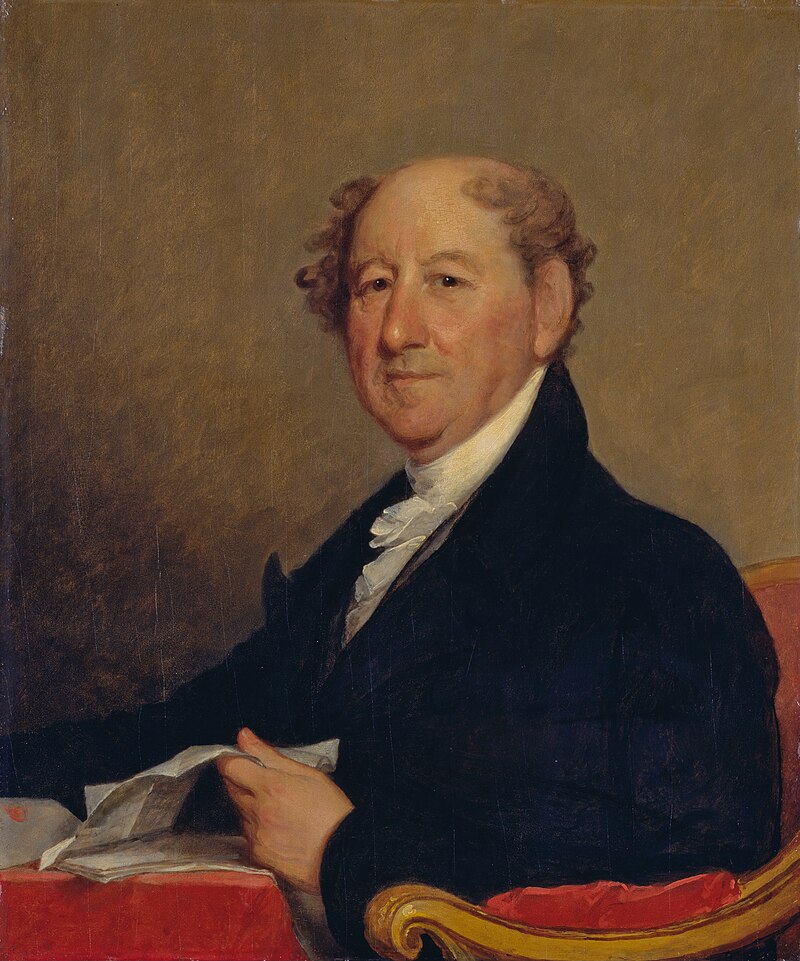
By the end of Madison’s 2 terms, the Federalist party were practically extinguished as a political force. Indeed, they didn’t even contend the 1812 election with Madison instead being opposed by fellow Democratic-Republican DeWitt Clinton, who lost a bit more narrowly than Federalists tended to around this time.
Still, this election was a total one sided affair in favour of Madison’s chosen replacement James Monroe, who destroyed the rather lame duck Federalist candidate Rufus King with 183 electoral votes to 34, and even more so in the popular vote with 72.9% to just a pitiful 13.2% for King. The Federalist party would die off for good after this, and Monroe would run unopposed for re-election in 1820.
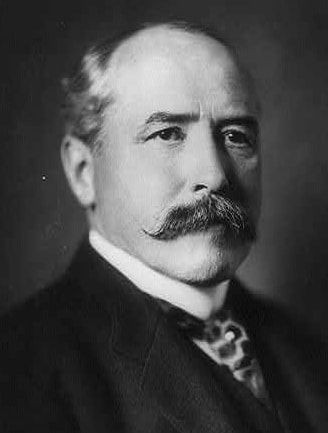
ALTON B PARKER (DEMOCRAT) (1904)
Total election landslides were pretty much unheard of for the entire remainder of the 19th century, as among issues such as economic populism, imperialism and particularly the issues of slavery and then African-American rights, the North and South of the US remained staunchly polarised between the Republican North and the Democrat South.
Teddy Roosevelt was at last a leader who wiped out a lot of those divisions. 3 years into his time as President (after being thrust into the role following the assassination of William McKinley) he not only won people over with his big force of personality and nationalism but his huge full scale war against corruption and elitism which had largely poisoned American politics for decades at that point.
So again this is another case where a lot of people would probably have lost badly, but Parker was to put it bluntly one of the worst major party candidates in American history. He spent his entire campaign criticising Roosevelt’s trust busting efforts, and particularly spent his campaign targeting solely whites in the South.
Parker was not totally wiped out in terms of the electoral vote (140 to Teddy’s 336) due to still holding on to a launch of staunch Democrat Southern states, but the popular vote was one of the biggest gaps in modern American history, with Parker winning only an abysmal 37.6% of the popular vote (practically entirely concentrated in Southern states) while Roosevelt won 56.4% of the popular vote, the highest popular vote of any Presidential candidate since James Monroe.
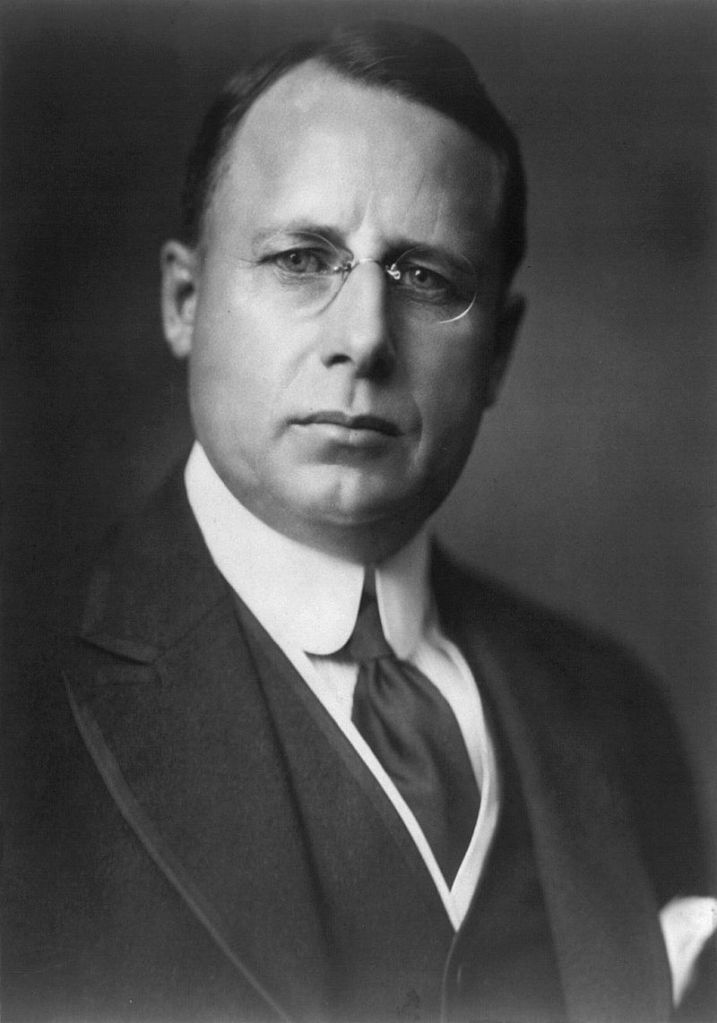
JAMES M COX/JOHN W DAVIS/AL SMITH (DEMOCRATS) (1920/1924/1928)
The 1920’s was an existential period for the Democratic party, more than any other time.
With the exception of Grover Cleveland’s two separate terms in office in the 1880’s/1890’s when he was seen as the anti-corruption and libertarian candidate, the party had been out of power in terms of the Presidency since the Reconstruction period, always narrowly losing elections to the Republicans as their support was always entirely contained in the former pro-slavery south. Even when Woodrow Wilson won the Presidency in 1912, it was due to a huge split in the Republican Party between the Taft and Roosevelt factions.
After Wilson proved to be an appallingly authoritarian and unpopular President, whose Presidency oversaw racial segregation, rising support for the KKK, entry into World War I, the country collapsing with riots, numerous military interventions and the Sedition Acts criminalising any criticism of the War and Government itself, both Republican and Democrat candidates in 1920 and 1924 ran as the antithesis of all that, with greater support for limited involvement of Government in the spirit of Washington/Jefferson, greater civil rights for African Americans and a big reduction in involvements in other nations.
Despite both candidates being very similar on those positions, the Democrats just couldn’t seem to win any support anywhere in the 20’s, even amongst their usually solid base in the South. James Cox in 1920 and John Davis in 1924, try as they might, were both too heavily associated with the Democratic transgressions of the 10’s to gain much support, and were stuck between embracing modernity and still trying to pander to their regressive southern base.
Anti-Democratic sentiment generally was arguably mainly responsible for Cox’s heavy loss, but the scale to which he was obliterated against a candidate probably as equally uninspiring as Warren G Harding was unbelievable, Cox winning 127 electoral votes to Harding’s astonishing 404, which again did not tell the whole story as the gap in the popular vote was far bigger, Harding winning 60.4% to Cox’s 34.1%. Still the biggest gap in popular vote in mostly a one-on-one race in the modern history of American democracy.
There’s little excuse though for Davis’ lacklustre showing in 1924. Again running as a very similar candidate to new Republican incumbent Calvin Coolidge, Davis didn’t at all manage to take advantage of the GOP being somewhat tarnished by the numerous corruption scandals under Harding or offer much alternatives to Coolidge in the face of a newly booming economy. He received a rather pitiful 28.8% of the vote, losing many votes to populist third party candidate Robert La Follette as well as to Coolidge, who won nearly 30% more votes than him. Most states he did win out of the 12 he won were won by vote splitting.
The one I feel most sorry for out of these 3 big election losers was Al Smith, who actually ran on a decent platform calling for bigger redistrubition of the current economic boom and improving conditions for farmers, but was hurt by Herbert Hoover being an incredibly popular choice as Coolidge’s successor, the aforementioned economic boom associated with the Republicans and some absolutely disgusting media attacks towards Smith for his Catholicism. With a combination of all these going against him, he became the third Democrat in a row to lose in a landslide, with just a measly 87 electoral votes to Hoover’s 444 (Jesus) and 40.8% of the popular vote (better than his 2 predeccesors then at least) to Hoover’s 58.2%.
HERBERT HOOVER (REPUBLICAN) (1932)
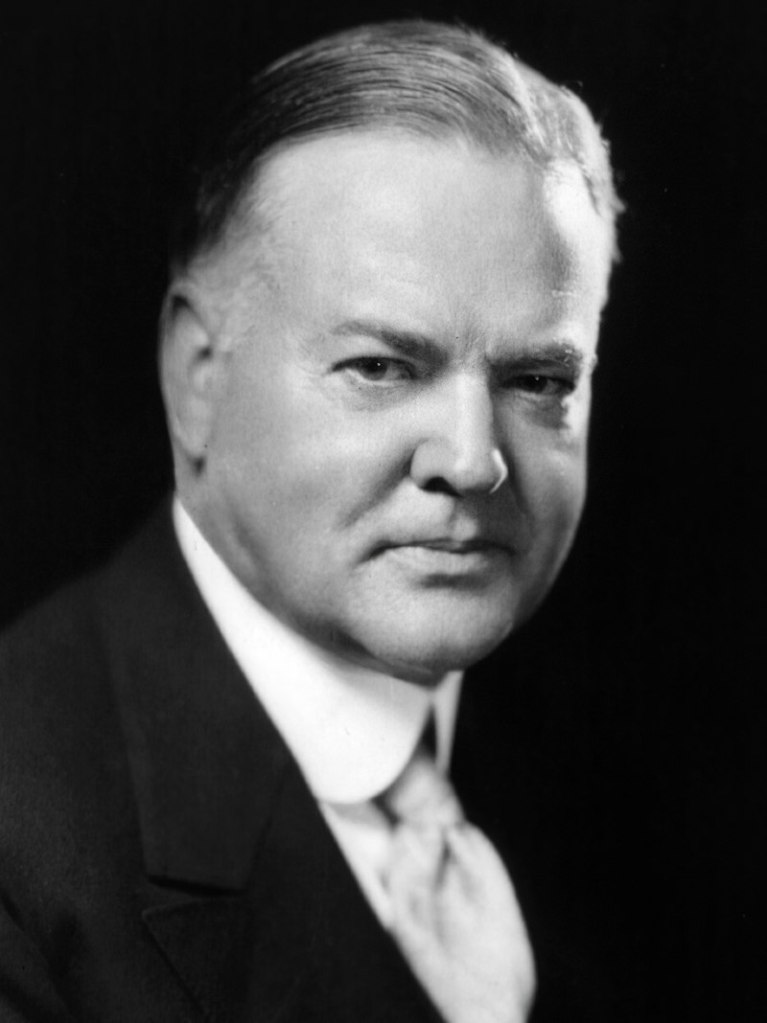
From landslide election winner to landslide election loser in one fell swoop, Herbert Hoover came into office at precisely the wrong time (the 1929 Wall Street Economic crash) and his actions in response arguably helped to exacerbate the crisis into what became the global Great Depression, the worst economic disaster in US history.
With his responses largely being seen as out of touch and more favouring the interests of elites and bankers, while millions fell into unemployment, homelessness and starvation, President Hoover was very predictably voted out in a gigantic rebuke of his time in office in 1932, losing to Democrat Franklin D Roosevelt with just 59(!) electoral votes and 39.6% of the popular vote to a gigantic 472 electoral votes and 57.4% of the vote for FDR. In both cases, an even worse defeat for him than the one he inflicted on Al Smith in 1928.
ALF LANDON (REPUBLICAN) (1936)

With FDR’s New Deal policies in full effect by the end of his first term and proving to be very effective at helping thousands of the poor and unemployed, as well as introducing safeguarding benefits for the elderly and the poor, most people in the US were very willing to overlook the fact that the Great Depression itself was still lumbering on without much of an end in sight, and that certainly not all of FDR’s New Deal policies had worked due to its short sighted governmental expansion in lots of areas that suffocated the economy, as his policies had also helped so many of them.
Alf Landon, a former oilman and lobbyist, was then a very curious and remarkably out of touch choice to take on the popular (if controversial) incumbent in 1936. Not only was Landon’s past used against him, as industries such as his and their reckless economic speculation were largely held responsible for the 1929 crash, but his rather open disdain for the New Deal as a whole and vows to roll it back proved hugely unpopular.
Predictably, Landon was annihilated in probably the biggest electoral obliberation in US history when looking at both the Electoral College and Popular vote. He won a grand total of 2(!) states and only 8(!) electoral votes as a result, with FDR being not too far off the full 538, winning 523. This for once reflected the massive gap in the popular vote across the country, with FDR winning 60.8% of the vote to Landon’s 36.5%.
Wendell Wilkie in 1940 and Thomas Dewey in 1944 wouldn’t have much luck against FDR either, but they both did significantly better than Landon.
THOMAS DEWEY (REPUBLICAN) (1948)
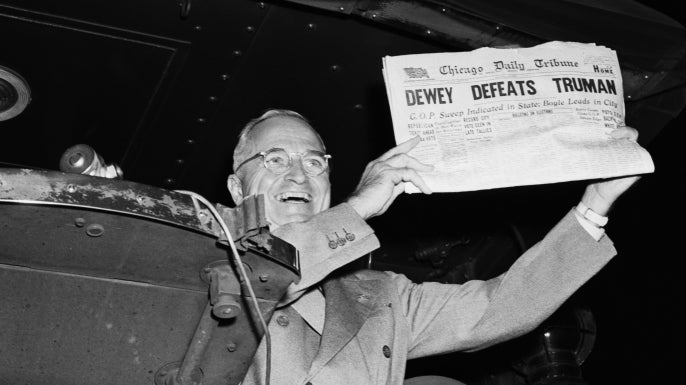
Poor old Harry Truman. He was being attacked from all corners 3 years into his Presidency. He was un-elected, being thrust into the role of VP months before FDR’s death. He was attacked by large sections of his own, traditionally racist and “pro-South” party for his bold decision to embrace expansion of Civil Rights for African-Americans, with a faction led by Strom Thurmond even splitting off and ran a third party campaign in support of segregation. Progressives were unhappy with his aggressive Cold War policies against the Soviet Union, and his controversial decision to use the Atomic Bomb. They also split off from the Democrats and formed their own party led by socialist and former VP Henry Wallace.
In hindsight, many have accepted that Truman was in an extremely difficult position with so many difficult decisions to make in the post-war period and so much increasing polarisation, yet he often made the decisions he felt were the most sensible, if controversial. Civil rights being a big one that most now obviously accept as a great thing. And he’s now correctly ranked as one of the greatest US Presidents. But it didn’t stop him from being very unpopular at the time, and with the Democrat partying splintering, it should have been a home run of an election victory for Republican candidate Thomas Dewey, running again after his rather predictable 1944 wartime loss.
But it wasn’t. Seemingly confident of victory, Dewey ran a very low-key campaign, avoiding pushing too much of a noticeable agenda. This was in stark contrast to Truman’s campaign, delivering passionate speeches all around the country, reminding the people of all the gains they’d made under the Democrats in the last 15 years.
The stark differences in campaigning resulted in a very surprising poll-defying result. Truman was predicted to lose comfortably even by the final day, and the Chicago Tribune even went as far as to already print the front page declaring victory for Dewey, which was gleefully paraded around by Truman the next day (see above).
Truman was certainly unpopular, but many voters evidently felt he was a lesser evil compared to a return for the Republicans. On election day, he only lost 4% of the Democrats 1944 vote to the Thurmond’s racist Dixiecrats (who won 4 states), while Dewey and the Republicans failed to expand on theirs. Thuse the end result was still a comfortable Democratic win, Truman winning 303 electoral votes and 49.6% of the popular vote, only a plurality rather than a majority but still significantly more than Dewey’s 45.1% of the vote and 189 electoral votes.
This is one rare inclusion on this list that wasn’t a landslide loss but in the context of the time was a crushing humiliation for the Republicans nontheless.
BARRY GOLDWATER (REPUBLICAN) (1964)
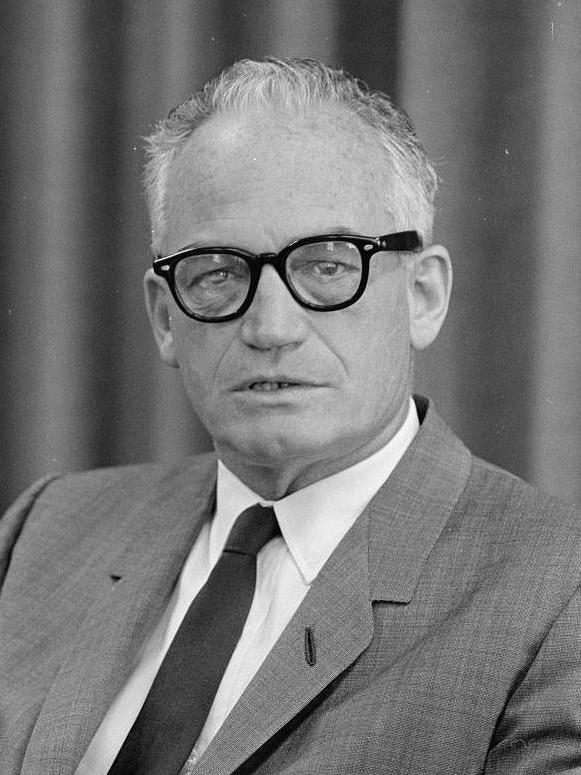
I guess you can sort of think of Barry Goldwater as the right wing Jeremy Corbyn. He had economic ideas out of step with the mainstream at the time, he was relentlessly attacked by the media for positions and beliefs he didn’t have and his foreign policy was…pretty messy.
In terms of his economic positions, Goldwater was probably closest thing to a truly libertarian candidate the US has had since the 1920’s. He was in favour of drastically cutting back overreaching state involvement and handing more power to the states. This included the Civil Rights Act, which he largely supported but had a more states-focused view than others did, and this was used to portray him as a hardline racist even though particularly after this campaign he became far more liberal on the rights of minorities and even LGBT people for the time.
Even though his economic positions would become embraced by Americans by 1980 and would help launch Ronald Reagan to power, in 1964 they were used to portray him as a dangerous radical. Which, to be fair, was not helped at all by his incredibly fanatical position on Vietnam, advocating a more harsh prosecution of the conflict. Despite the fact that Lyndon Johnson himself would end up doing just that in office, he used that very real flaw of Goldwater’s to portray him as an incredibly dangerous radical who would start a nuclear war, epitomised by the infamous “Daisy advert”, possibly the most over the top political attack ad in US history.
There’s also the added factor that the country was strongly behind LBJ off the back of his former boss John F Kennedy’s assassination.
With all this going against him, plus his rather awful position on Vietnam, Goldwater was smashed by a wide margin, with only 52 electoral votes to LBJ’s 486 and, more horrendously, a measly 38.5% of the popular vote to LBJ’s enormous 61.1%.
But, in amongst the smashing, Goldwater did significantly take a number of Southern states (the only states he managed to win) which was unusual for a Republican at the time and marked the beginning of the party switch in terms of Northern/Southern support after the Democrats had not only embraced but passed civil rights for blacks.
GEORGE MCGOVERN (DEMOCRAT) (1972)
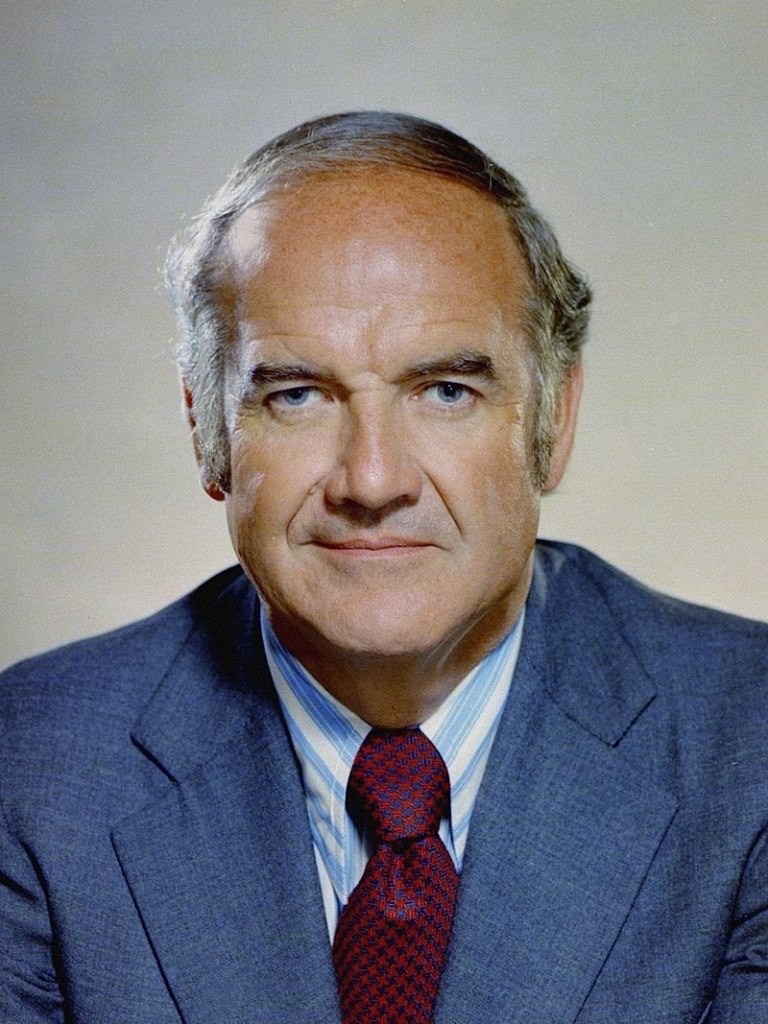
George McGovern is a funny one in that it’s just kind of hard to explain just *why* he lost so badly. In fact, he suffered probably the biggest election wipeout in US history next to Alf Landon in 1936. Now sure, Richard Nixon was at his moment of peak popularity in 1972, having just managed to ease Cold War tensions for the first time in 30 years via Detente with the Soviets and the opening up of trade with China. But Nixon was never exactly a President up there with the huge popularity of FDR or Eisenhower even before his post-1972 downfall due to Watergate.
Plus, if you look at McGovern’s record as a Senator it really seems like he was a very solid and principled man with a great record of fighting for ordinary people and holding a lot of very sensible economic and social positions. So why was he so ludicrously unpopular? Unpopular enough even to be the first US Presidential candidate ever to win only 1 solitary state (even Landon won 2) with only 17 electoral votes to Nixon’s 520 and just 37.5% of the popular vote to Nixon’s 60.7%?
Well to be honest I think it largely comes down to an absolute disaster of a campaign with multiple PR failures, most of all being a split Democratic party. With plenty of politicians on the Democratic side still taking a more middling stance on the Vietnam war, wanting victory before pulling out, they decried McGovern’s position on exiting the war immediately as “radical” and refused to support him.
McGovern also sadly came across as mostly a very poor and uncharismatic speaker much of the time, which was becoming more important in modern politics, and things were made worse by his choice of running mate (Thomas Eagleton) having to pull out due to undergoing electro-shock therapy for mental health issues.
All of these numerous campaign failures, a split party, Nixon’s foreign policy successes and even a significantly lower turnout of just 56.2% practically left Nixon running unopposed in 1972, which would explain the sheer scale of the loss.
JIMMY CARTER (DEMOCRAT) (1980)
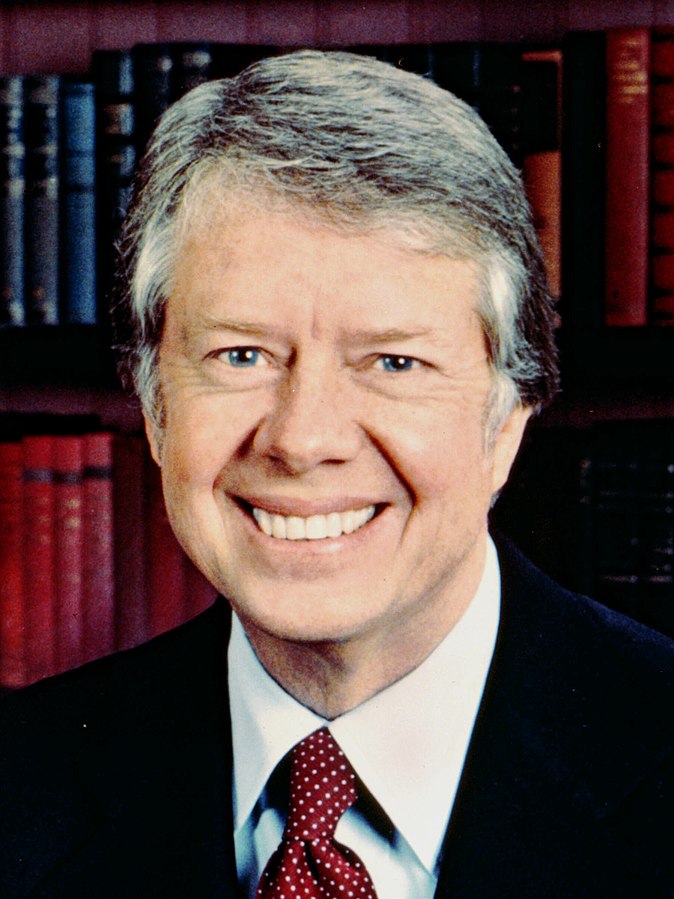
The only other incumbent 1 term President to be on this list alongside Herbert Hoover and again the scale of his defeat was certainly influenced by the uniquely bad economic situation of the time, with the stagflation crisis of the 1970’s making practically everyone’s lives miserable.
Much like Hoover himself, except without actually inflaming the crisis like he did, Carter’s leadership was largely viewed as uninspiring by most, with his rather drab and occasionally condescending speeches proving offputting and Americans still not feeling any improvement in their ordinary lives after a full Carter term of throwing solutions at a wall. The absolute catastrophe of the Iran Hostage Crisis and the revival of Cold War tensions also dented Carter’s popularity so close to the election year.
Carter did his best to cynically portray his charismatic opponent Ronald Reagan as a right wing extremist (which in some cases he appeared to be, on some social issues) but voters evidently ended up preferring the risk of a Reagan Presidency to a further 4 years of Carter, particularly with Reagan at least offering new, appealing solutions to a seemingly never ending economic malaise.
Indeed, Reagan ended up winning 50% of the vote, while Carter ended up at 41%, losing votes not only to Reagan but to moderate liberal third party candidate John B Anderson, who got 6.6% of the vote nationwide among people who disliked Carter but couldn’t stomach Reagan. Either way, he lost a shit load of votes, and ended up winning only 6 states and 49 electoral votes to Reagan’s 489 electoral votes.
WALTER MONDALE (DEMOCRAT) (1984)
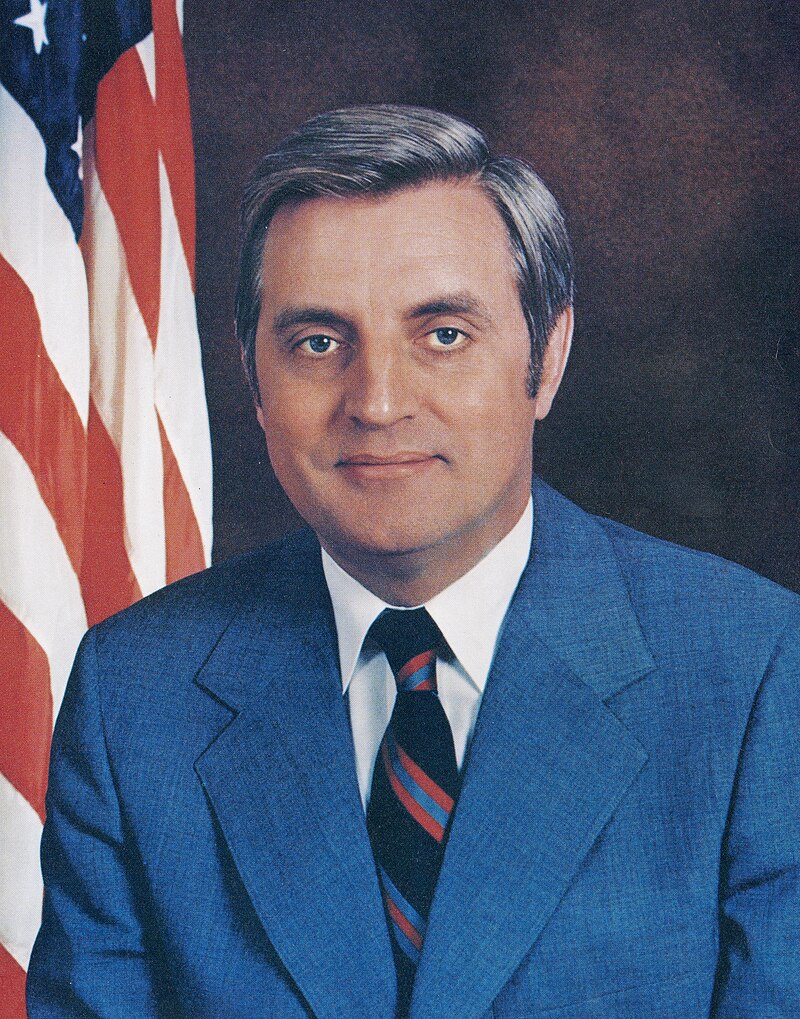
It’s our third Democrat in a row! And another election against Ronald Reagan.
In a pattern largely repeating that of the 1930’s, the US was finally recovering from a long and brutal economic wreck by the end of Ronald Reagan’s first term as President, and overnight he went from being quite unpopular in the polls around the time of his hard anti-inflation policies (wisely continued from Carter) to nearing 60% levels of popularity as the American economy started growing fast and prices finally started dropping to unprecedently low levels. Now, of course, Reagan’s trickle-down ideology of tax cuts would end up being unsustainable as his failure to reign in spending and borrowing at the same time ended up causing debt to skyrocket and help ensure that most of the benefits from this went to the wealthy, but Americans weren’t to know this at the time of course.
Meanwhile, the Democrats unwisely ran a candidate associated with the previous regime, Carter’s former Vice President Walter Mondale, who also pledged to raise taxes.
Mondale, much like Carter and McGovern, was a very good man who I feel bad about putting onto this list, but again his campaign was pitiful, barely putting up much of a fight against the super charismatic Reagan in debates and failing to offer much of an inspiring platform.
Not many people had a chance against Reagan in 1984, but it’s regardless embarassing that Mondale wound up becoming the one and only candidate in US history to come within inches of losing all 50 states. Despite gaining 40% of the vote (not extraordinarily bad on its own) compared to Reagan’s 58%, voters in 49 of the 50 states preferred Reagan to Mondale, even in states where a lot of votes went to third party candidates and Reagan only squeaked through. And Mondale, pitifully, only won his home state Minnesota, by just a couple thousand votes.
HILLARY CLINTON (DEMOCRAT) (2016)
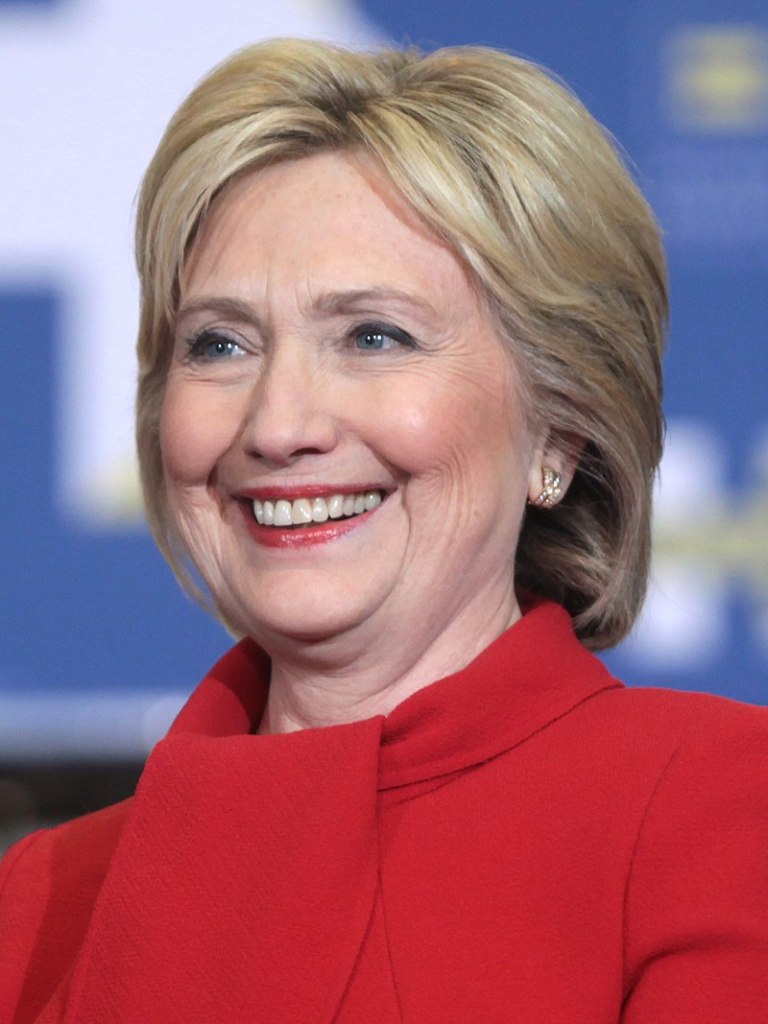
Yes I will include Clinton in this even though she wasn’t against an incument and only lost by thin margins. Why? Do I have to explain? Look at who her fucking opponent was.
2016 remarkably saw the increasingly out of touch Democratic party pick the only candidate who could possibly lose to a vile, inept, racist and sexist candidate in Donald Trump who right up until election day was considered unelectable. Indeed, even on election day Clinton won 3 million more votes than Trump, who didn’t exactly get a massive mandate with less of the share of the vote than what previous failed Republican candidate Mitt Romney received in 2012, at just 46%. The narrative of this election was supposed to be the Republicans failing to learn their lessons of past elections and remaining a losing party out of touch with the increasingly progressive views of the majority of Americans and unable to appeal to anyone beyond elites.
And yet, Hillary Clinton’s own unpopularity helped hand the election to the selfish wannabe demagogue. Not only did she have the charisma of a turnip, she represented a return for the Democratic party to uninspiring, technocratic, rather snobbish candidates with deep connections to the Washington elite and fully content with the US establishment, as opposed to the popular and charismatic outsider Barack Obama, and plenty of voters in swing states chose to switch to third party candidates rather than either of the deeply unpopular candidates. And due to Trump having more outright passionate suppporters than Hillary, he managed to squeak ahead of Clinton in all these very key swing states, resulting in him winning more states and electoral votes than Hillary despite her getting more votes than him across the country (she won 48%).
She has since refused to accept that her poor campaign and arrogant lack of ability to visit and connect with traditional Democratic voters in swing states particularly were big reasons for losing the election, and even blamed progressive voters of her primary opponent Bernie Sanders for refusing to back her (even though most of them did, and Sanders even endorsed Clinton after losing). What a charming woman!
And yes, if Kamala Harris manages to lose November’s upcoming election to Trump as well, consider her added to this list.
 The Circled Square
Leave a comment