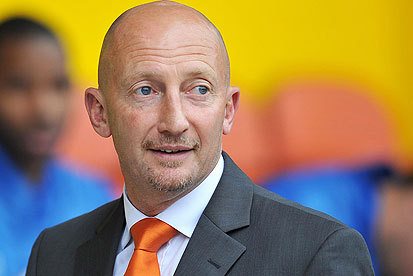
With one of football’s wackiest characters, even by football manager standards, returning to the dugout this month with his appointment as manager of struggling League 2 basket case Swindon Town, I thought he’d be a good case to start my series of individual pieces on football managers and my overall judgement on their careers, strengths and weaknesses. I will be going through each job they did throughout their careers and judging how good/bad of a job they did there, and then making an overall judgement on how good/bad of a manager they were in their prime overall.
We start then with Holloway, a caricature of the typical British football manager in many ways and an EFL journeyman, yet also someone who in his prime was known for his teams playing direct and exciting football, further backed up by his eccentric personality.
BRISTOL ROVERS (1996-2001) (GRADE: B)
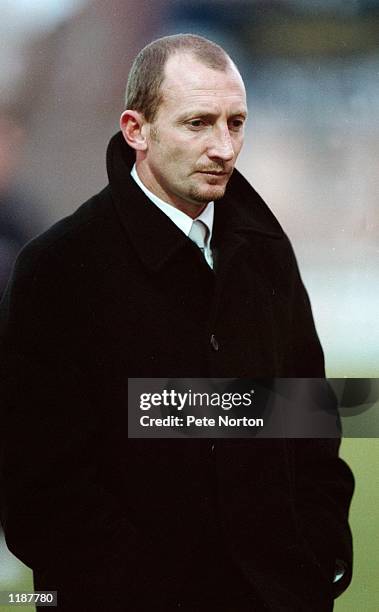
A Rovers legend as an academy graduate and with 2 stints as a player, Holloway’s first time stepping into the dugout as a gaffer was as player-manager of the struggling third tier Bristol club, in financial turmoil at the time and in danger of dropping into the Third Division (now League Two).
Holloway stabilised his home club in Division 2, keeping them up with a 17th place finish in the 1996-97 season before impressively taking them to the play-offs the season after despite their off-pitch troubles. This was followed by a mid-table finish in the 1998-99 season and close shave with the play-offs again in the 1999-00 season, ultimately finishing 7th. The club’s financial problems and neglect were still not resolved in this period however, and Holloway departed for QPR with Rovers headed towards relegation towards the end of the 2000-01 season.
QUEENS PARK RANGERS (2001-2006) (GRADE: A)
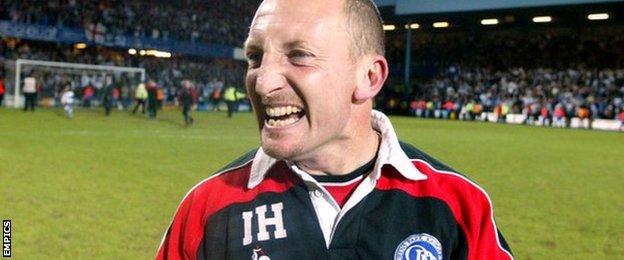
From one club where he both played for and managed to another, Holloway also managed QPR during a horrible period for the club off the pitch, but in even worse circumstances. After Holloway arrived in February and was unable to prevent his former club’s relegation to Division 2 for the first time in 34 years, QPR entered administration and Holloway was tasked with stabilising and rebuilding a club in turmoil and with little money to spend in the third tier.
Holloway delivered on this and then some. Despite all these problems, they mounted a challenge for the play-offs and finished 8th in the 2001-02 season. They then went further and finished 4th in 2002-03, only losing out on promotion to the Championship 1-0 to Cardiff in Extra-Time of the Play-off final. Their consistent progression continued with promotion, finishing 2nd in 2003-04 and then finishing 11th in their first season back in the Championship.
The club continued to be a basket case off the pitch however, and Holloway ended up dismissed from the job midway through the 05-06 season amidst rumours he was being lined up for the job at fellow Championship side Leicester City. Nevertheless he did an imbeccable job at the club in his 5 years there and surely goes down as one of the most important managers in the club’s history given the circumstances.
PLYMOUTH ARGYLE (2006-2007) (GRADE: B)
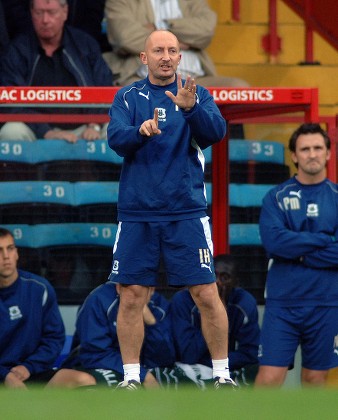
Holloway isn’t very popular amongst the Plymouth fanbase thanks to the nature of his departure, abandoning them a few months into the 2007-08 season to finally take the Leicester job (which he had also been linked with the previous season while at QPR), even if that move ultimately backfired on him and Plymouth went on to do fine without him.
But looking at the actual job he did at Plymouth, it was pretty good. Holloway’s first season (2006-07) saw him improve their position in the Championship from 14th to 10th and guide them to the FA Cup Quarter-Final. He also left them in quite a solid position the following season.
LEICESTER CITY (2007-2008) (GRADE: D)
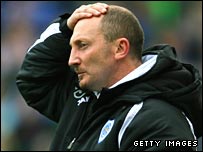
Holloway’s first failed managerial spell was his ill-fated time as Leicester manager, ironic after he’d torpedoed both his prior jobs at QPR and Plymouth in order to try and get the job.
Holloway doesn’t really get most of the blame for Leicester’s relegation, as the club was in turmoil at the time of his appointment and lacking any sort of stability and identity, as well as lacking in player quality, but the fact remains he was appointed as early as November yet failed to keep Leicester in the Championship. He stepped down immediately after relegation was confirmed on the last day.
BLACKPOOL (2009-2012) (GRADE: A)
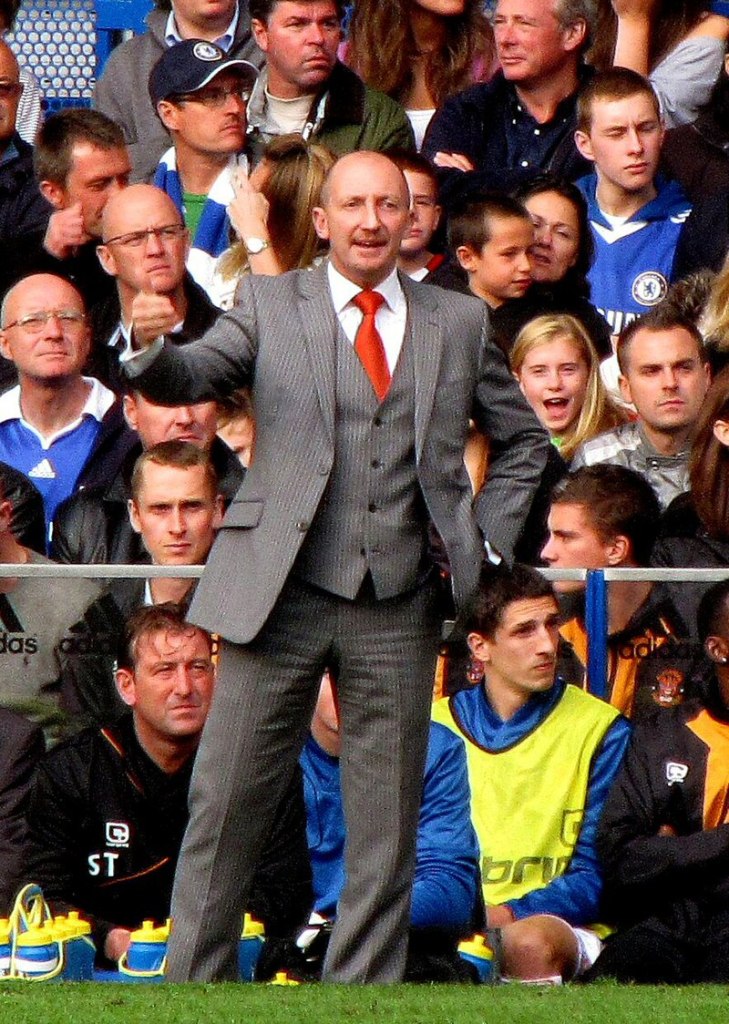
Here’s the job that Holloway is of course best known for and that is his stint at Blackpool. There’s an argument that he’s the greatest manager in the Lancashire club’s history for how much he overachieved with them out of nowhere in such a short space of time.
Owned by the crooked and penny-pinching Oystons for the past decade or so at that point and having been left behind by modern football, Blackpool had been mired in League One for ages and had overachieved to start with under previous boss Simon Grayson in gaining promotion to the Championship to start with and then slightly managing to stay up the next two seasons.
Remarkably, Holloway took this unfancied side and added a famously high-octane, direct and attacking style of football that took Blackpool all the way to the Premier League through the play-offs in his very streaky but excellent first season (seeing them promoted to the top flight for the first time since 1971) and almost saw them clinch survival in the Premier League in their one season there despite being written off by everyone and spending little. Hell, relegation ended up being a disappointment by the end, given that they were legitimately flirting with Europe up until January until their defensive weaknesses could no longer be covered up by goals scored. 2010-11 Blackpool to this day remain one of the Premier League’s most fondly remembered cult teams due to their kamikaze-style attacking football, battling against the odds and Holloway’s consistently outrageous and entertaining interviews.
In his final full season, he almost got Blackpool straight back to the Prem again with a 5th place finish, only narrowly losing out to West Ham in the play-off final. After this, he departed for the more ambitious Crystal Palace following a poor transfer window and a mediocre start to the 2012-13 season.
CRYSTAL PALACE (2012-2013) (GRADE: C)
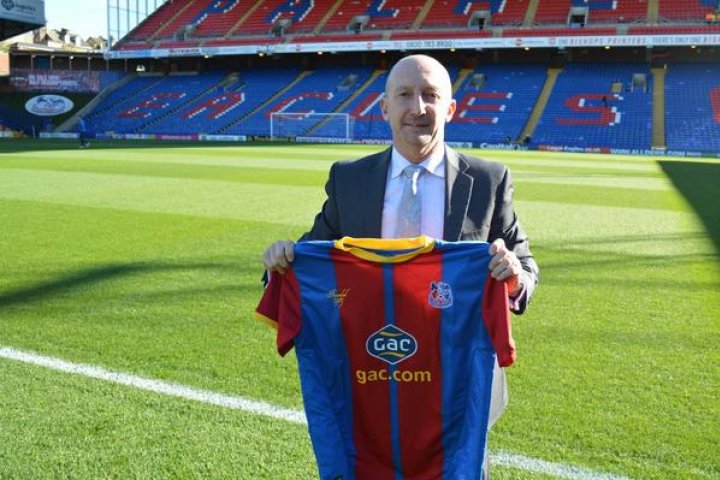
You’d expect a higher grade than C considering it was under Holloway that Palace got promoted to the Premier League right? Well….uh….no. Context matters.
Holloway took over as the new Palace manager a few months into the 2012-13 season, after Palace had already recruited a strong team and made an excellent start under Dougie Freedman, who himself departed to join Bolton. Holloway’s actual results after his appointment were pretty mediocre, with Palace going from top of the table in November (when he was appointed and won his first 3 games) to finishing 5th and barely clinging on to the play-offs after a particularly poor 9 game winless run towards the end of the season.
Holloway does certainly deserve credit for not fucking up and keeping Palace in the top 6, and seeing them through the play-offs themselves to secure a surprising promotion, including a satisfying semi-final win over arch-rivals Brighton. But the way he achieved promotion was hardly inspiring.
Added to that, he’d depart Palace very quickly into the Premier League Season after they lost 7 of their first 8 games in convincing fashion, seemingly feeling he could take the club no further.
MILLWALL (2014-2015) (GRADE: F)

Holloway would very quickly return to Championship management after leaving Palace, being appointed as the new manager of struggling Millwall in January 2014. Initially viewed as a coup for one of the league’s lowest budget clubs given his previous successes with Blackpool, Holloway would instead wind up as an absolute disaster and one of Millwall’s most hated managers.
Holloway did in his first half-season manage to keep Millwall up, albeit after an initially terrible first 2 months which saw them sink to the bottom of the table by March, but things fell to pieces after a dreadful summer transfer window, which included Holloway signing 2 of his good old boys from Blackpool.
Clueless and lacking in ideas, he found himself sacked (finally) in March as Millwall sank deep into the relegation zone, a move which came way too late as even as they experienced an instant revival under Neil Harris, the club legend was unable to save them from dropping into League One.
This marked the first time Holloway was straight up sacked as a manager, having parted ways with QPR and Crystal Palace by mutual consent and having to jumped ship from his other clubs.
Also, if you want a fun summation of how he’s viewed by Millwall fans, here’s his glorious return to the Den as QPR manager: https://www.youtube.com/shorts/fi7avgXXd4I
QUEENS PARK RANGERS (2016-2018) (GRADE: C)
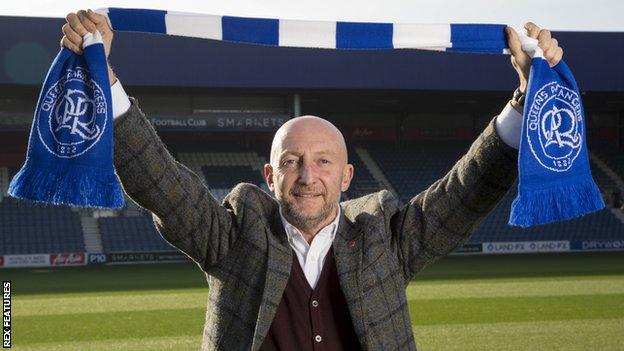
After over a year out of management, Holloway made a return to his old club, stepping in again while QPR were in the midst of a crisis, needing to drastically cut their wage bill after their infamous Premier League spending sprees in the early 2010’s and being mired in Championship mediocrity.
Holloway did not achieve the most exciting results in his 2nd QPR stint, with QPR’s form ridiculously erratic and streaky after his return in November 2016, and in his one full season (2017-18) he managed merely a lower mid-table finish, given full context he did a decent enough job of stabilising the club as they blended in a lot of younger players while being forced to operate on lower wages. His dismissal at the end of the season in favour of Steve McClaren (who didn’t exactly take the club forward) was certainly very harsh.
GRIMSBY TOWN (2019-2020) (GRADE: F)
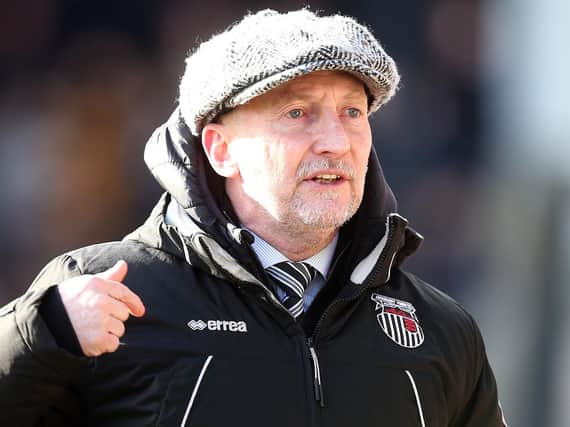
It’ll be his last job in football management, 4 years ago, that might give Swindon Town fans second thoughts about this appointment, even down at League 2 level.
While managing to initially turn around Grimsby’s form in the 2019-20 season after joining the club as both manager and a shareholder, things went bad very quickly after the onset of the COVID-19 pandemic, with Holloway getting the club fined for he and his players breaking lockdown rules, signing a bunch of overpaid has-beens with little recruitment strategy and leaving Grimsby with an absolute shambles of a squad that ultimately got relegated down to the National League, with Holloway himself bailing in suprise fashion mid-way through the season.
Holloway’s entire time at Grimsby was an utter car crash both on and off the pitch and perhaps summarised how out of touch he is with the modern game in terms of his approach to recruitment, amongst other things.
OVERALL JUDGMENT
My overall view on Ian Holloway is that very similar to Neil Warnock and some others he’s one of the EFL’s great journeyman gaffers and characters. It’s easy to forget now given his more high profile recent failures at Millwall and Grimsby, but for a good 15 years he was a very consistently solid manager with relegation at Leicester his only blip.
He stabilised Bristol Rovers and QPR in tough times, overachieved with Plymouth and Blackpool and won another PL promotion with Palace. Even did a decent job later down the line at stabilising QPR again in a tough period.
It is also evident given his more serious high profile failures at Leicester, Millwall and Grimsby that in the wrong job he can be a total disaster, with his carefree and juvenile attitude in interviews no longer coming across as charming when he’s repeatedly standing on the touchline clueless as to how to change things. It’s evident throughout his career he’s never been a tactical genius, and one of the classic “vibes” managers more than anything else.
It will be very interesting to see which Ian Holloway we get at Swindon Town.
 The Circled Square
Leave a comment